
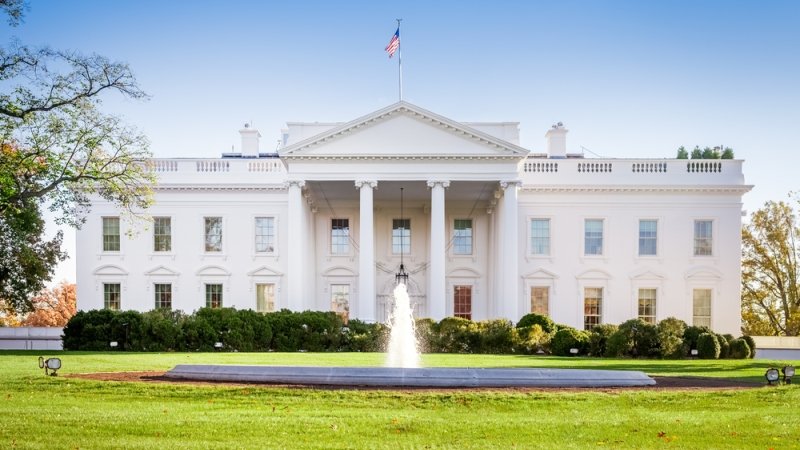
The U.S. federal government, under Donald Trump’s administration, has quietly paused a highly controversial draft executive order that would have sought to pre-empt state-level laws on artificial intelligence (AI). According to reporting by Reuters, the order would have created an “AI Litigation Task Force” to challenge state laws on constitutional grounds and threatened to withhold federal broadband funding from states that advanced AI regulation.
The pause comes amid strong bipartisan resistance, state-level pushback, and a broader clash over federalism, innovation, safety, and the proper locus of oversight for AI systems.
What the Draft Executive Order Would Have Done?
According to the Reuters article, the draft executive order would have directed the Department of Justice (DOJ) , via Attorney General Pam Bondi to establish an AI Litigation Task Force whose sole mission would be to “challenge state AI laws, including on grounds that such laws unconstitutionally regulate interstate commerce, are preempted by existing federal regulations, or are otherwise unlawful.”
Additionally, it would have tasked the Department of Commerce with reviewing state AI laws and issuing guidance to potentially withhold or condition federal broadband‐infrastructure funding (notably via the BEAD programme) from states that enacted what the federal draft considered “burdensome” AI regulation.
The rationale cited: the administration argued that a patchwork of state laws threatened U.S. AI leadership, innovation and competitiveness. One thinking is that if every state imposes different standards, companies face high compliance burdens, fragmentation, and slower deployment.
Why the Push-Back Was Fierce?
- States’ rights vs federal dominance
Several state Governors, attorneys general and legislators both Republican and Democrat, rejected the idea of sweeping federal pre-emption of state laws. They argued that states have an essential role in protection of consumers, children, fairness, algorithmic bias, fraud, deepfakes and other harms. As Reuters put it, they warned that the draft order “would attack states for enacting AI guardrails that protect consumers, children, and creators.” - Popular opposition
Polling indicates Americans across parties strongly oppose blocking states from regulating AI. For example, a poll found that only 19 % supported Congress adding a provision to the NDAA that would block state regulation of AI — while a substantial majority opposed it by a roughly 3-to-1 margin. This suggests that policymakers pressing for pre-emption were facing public unease regardless of innovation narratives. - Industry and innovation assumed vs safety concerns
While many large AI actors and technology investors supported harmonised federal standards (less regulatory fragmentation = lower cost), critics pointed out that “innovation” arguments often dwarf safety, ethics and local context. One analysis warned that “federal pre-emption would invalidate key state laws that protect against ‘high-impact’ AI,” such as those dealing with children, civil rights or algorithmic harms. - Precedent of the Senate vote
Earlier in 2025, the U.S. Senate overwhelmingly (99-1) rejected a measure that would have blocked states from regulating AI for ten years and tied it to broadband funding. The current executive order draft appears to revisit the same strategy, but the earlier blow-out vote signalled very low tolerance for sweeping federal pre-emption.
Why the Pause Matters?
The decision to pause the executive order , rather than press immediately ahead is telling for several reasons:
- It underscores the limits of executive power when weighed against state sovereignty and political backlash.
- It gives the administration space to recalibrate its strategy—possibly shifting toward a federal floor plus preserved state freedoms, rather than outright state preemption.
- For the AI industry, the pause introduces uncertainty: companies that were pushing for uniform regulation must now factor in ongoing state action, regulatory fragmentation risk and unclear federal direction.
- For states and safety/regulation advocates, the pause offers breathing room to reaffirm their role in regulating AI-related harms rather than being overridden.
In a commentary piece, analysts argued that Congress now has “a fresh chance” to address AI governance and the federal-state division of powers. Rather than federal override, the implication is that a more balanced path may be emerging.
Key Questions for AI Governance Moving Forward
- Will the federal government define a robust minimum standard for AI (federal floor) and allow states to go further (federal + state model), or will it revert to a purely federated model with states largely free to act?
The earlier moratorium efforts assumed the former (federal exclusivity), but the political backlash may shift toward the latter. - How will industry respond?
AI firms broadly favor clarity and lower compliance costs, yet many also face growing reputational and liability risks from AI harms. They may not uniformly favour federal pre-emption if it means weaker safeguards or public backlash. - What recognition will be given to state regulatory innovation?
Prior to this push, many states had already begun AI laws (e.g., algorithmic transparency, bias audits, deepfake/child safety) refusing to recognise that risks vary across states may undermine responsive governance. - What about the interplay with infrastructure funding?
The draft order would have used federal funding as leverage over states. Using funding strings to enforce regulatory alignment raises new legal and constitutional questions (interstate commerce, conditional spending, federalism). The pause gives time to re-evaluate whether that leverage is viable or wise. - Timing and legislative vs executive routes
The path taken will matter. Executive orders can be reversed or challenged; legislation provides stability but takes more negotiation. Given the earlier legislative defeat (99-1 vote), the administration may delay legislative action, hence the use of executive tools.
Why This Matters for Global Observers (and for India)?
For observers outside the U.S., this episode is emblematic of how difficult AI governance is not just technically, but politically. The U.S. is wrestling with:
- how to protect innovation and economic leadership,
- how to contain or regulate AI harms (bias, safety, misuse, deepfakes),
- how to navigate federal-state dynamics (a similarity in many federations like India), and
- how to engage public sentiment, which appears wary of heavy industry-friendly deregulation.
For India (and organisations like yours, working in the AI & legal governance space like JustAI), several take-aways emerge:
- Regulatory fragmentation risk: Just as U.S. states are moving at different speeds, Indian states (or local regulators) may also diverge unless there is a clear central framework.
- Leverage of funding: The U.S. strategy of tying infrastructure funding to compliance might inspire or caution Indian regulators in their funding-conditional governance.
- State vs national roles: The balance between central (federal) and state regulation is key. In India, state governments are already active in data protection, surveillance laws, police powers, etc. Overriding state initiative might provoke push-back.
- Public sentiment matters: The U.S. polling shows widespread opposition to state pre-emption of regulation. In India too, citizen trust, awareness and legitimacy will matter governance frameworks need buy-in, not just proclamation.
- Innovation vs safety dynamic: Many argue that strong regulation stifles innovation; others warn unregulated AI harms may erode trust and value. The Indian governance challenge will be to balance both.
Bottom Line
What began as a sweeping federal push to override state AI laws in the U.S. has hit a wall—not because innovation concerns are gone, but because heavy-handed federalism is politically unsustainable. The decision by the White House to pause the proposed executive order signals a recalibration: rather than a full frontal assault on state regulatory autonomy, the likely path now is a more nuanced negotiation.
For agencies, companies and civil society, the evolution of that negotiation will matter deeply. Will Washington steer toward one federal standard only, or toward a federal baseline plus state freedom to go further? The answer will shape not only U.S. AI governance, but ripple through global regulation discourse —including in India’s evolving AI and data privacy landscape.
From governance perspective, this moment underscores the importance of inclusive governance design, clear regulatory architecture, and anticipatory frameworks that align innovation imperatives with human-centric values. As your work in AI audits, governance roadmaps and legal training suggests, the era of “let the states regulate” versus “one federal standard rules all” may be less relevant than a hybrid model, one that both preserves local responsiveness and provides national coherence.
Let me know if you would like a dive-in on how individual U.S. states are responding, or how this compares with the EU’s regulatory model (EU AI Act), India’s Digital Personal Data Protection Act, 2023 (DPDP) and enforcement strategies.