Blog

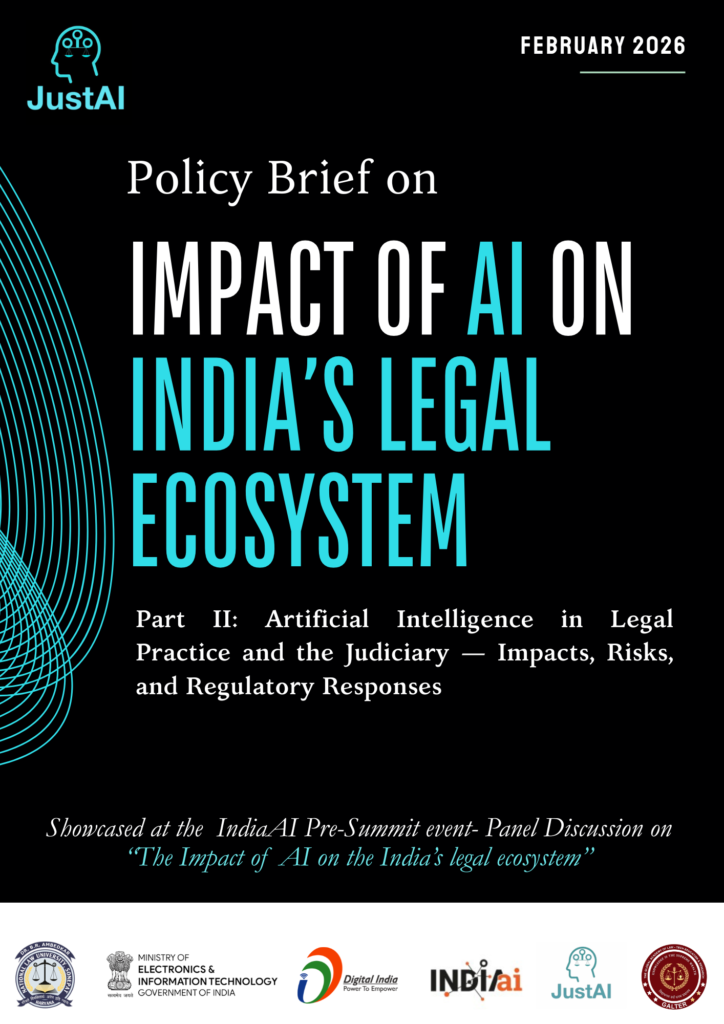
POLICY BRIEF ON IMPACT OF AI ON INDIA’S LEGAL ECO-SYSTEM| PART-II Artificial Intelligence in the legal practice and the judiciary- Impacts, Risks, and Regulatory responses

Artificial intelligence is no longer a distant idea in India’s legal ecosystem, it is already beginning to reshape both how law is taught and how it is practiced. In classrooms, AI tools are influencing research, writing, and learning methods, while in professional spaces, they are being used for legal research, drafting, case management, and even […]
POLICY BRIEF ON IMPACT OF AI ON INDIA’S LEGAL ECO-SYSTEM| PART-II Artificial Intelligence in the legal practice and the judiciary- Impacts, Risks, and Regulatory responses Read More »

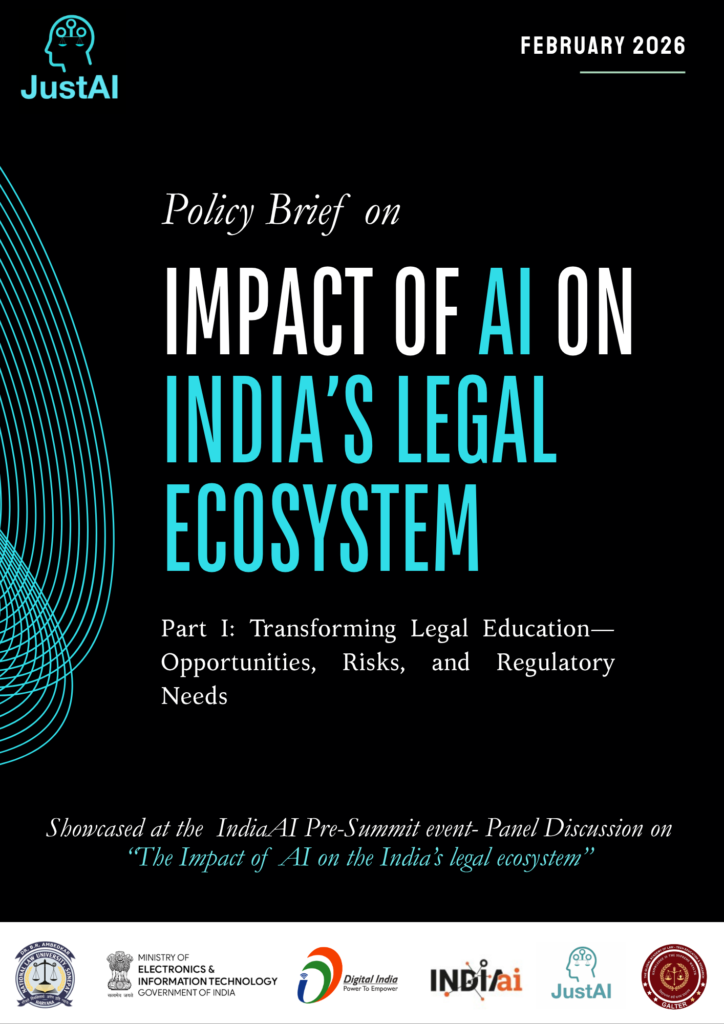
POLICY BRIEF| Impact of AI on India’s Legal Ecosystem  PART- I: Artificial Intelligence in Legal Education: Opportunities, Risks, and Regulatory Needs

This policy brief is the part of the the Official IndiaAI Pre-summit event: National seminar on Impact of AI on the Legal Ecosystem organised by JustAI Edutech LLP in collaborration with the DBRANLU, Sonipat and GALTER

POLICY BRIEF| Impact of AI on India’s Legal Ecosystem  PART- I: Artificial Intelligence in Legal Education: Opportunities, Risks, and Regulatory Needs Read More »

INDIA INTRODUCES THE AI ETHICS AND ACCOUNTABILITY BILL: A TURNING POINT IN HOW THE COUNTRY GOVERNS AI (18.12.25)

India has introduced its first legislative framework to govern artificial intelligence. The AI Ethics and Accountability Bill, 2025 proposes statutory oversight, penalties up to ₹5 crore, and criminal liability for AI misuse marking a decisive shift from voluntary AI principles to enforceable accountability.

INDIA INTRODUCES THE AI ETHICS AND ACCOUNTABILITY BILL: A TURNING POINT IN HOW THE COUNTRY GOVERNS AI (18.12.25) Read More »

SALMAN KHAN APPROACHES DELHI HIGH COURT TO PROTECT HIS IDENTITY FROM DEEPFAKE MISUSE (17.12.25)

Bollywood actor Salman Khan has moved the Delhi High Court seeking protection of his personality and publicity rights amid growing misuse of his name, image and likeness online. The court has directed social media platforms to act swiftly on the complaint, highlighting rising concerns around identity misuse, fake endorsements and digital impersonation in India’s online space.

SALMAN KHAN APPROACHES DELHI HIGH COURT TO PROTECT HIS IDENTITY FROM DEEPFAKE MISUSE (17.12.25) Read More »

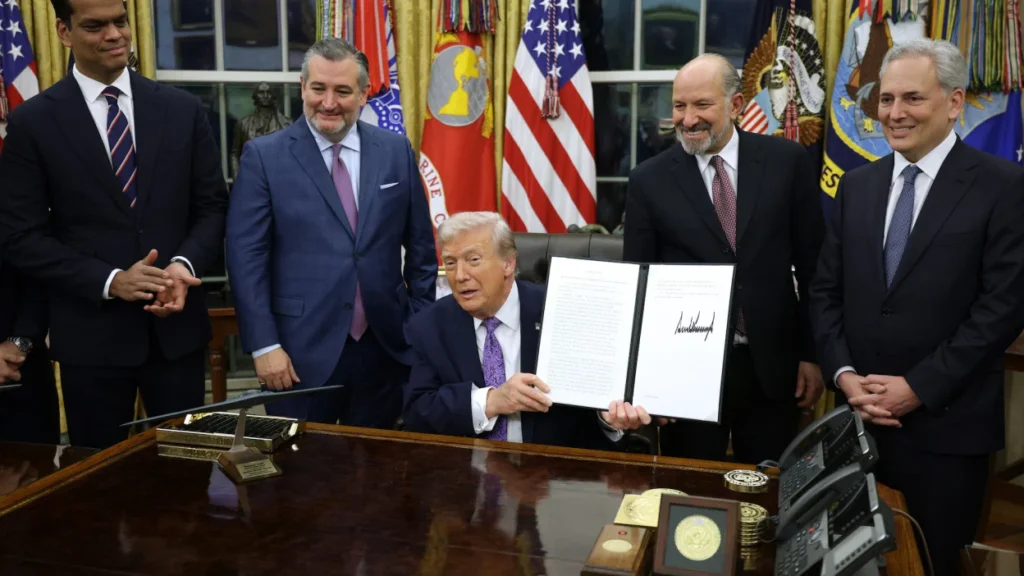
TRUMP MOVES TO REIN IN STATE AI LAWS WITH NEW EXECUTIVE ORDER

President Donald Trump has signed an executive order directing federal agencies to challenge and curb state-level artificial intelligence laws, marking a sharp shift in the U.S. approach to AI governance. The move raises fresh legal questions around federal preemption, states’ rights, and the absence of a comprehensive national AI framework.

TRUMP MOVES TO REIN IN STATE AI LAWS WITH NEW EXECUTIVE ORDER Read More »

Supreme Court of India flags ‘ fake case laws’ in Omkara–Gstaad dispute (10.12.25)

India’s Supreme Court has detected its first major misuse of generative AI in court filings, after a litigant in the Omkara–Gstaad insolvency dispute submitted a rejoinder packed with allegedly fabricated case laws and twisted legal principles. The incident has triggered fresh alarms over AI “hallucinations” and professional accountability in the legal system

Supreme Court of India flags ‘ fake case laws’ in Omkara–Gstaad dispute (10.12.25) Read More »

Google Faces EU Antitrust Probe Over Use of Online Content for AI (10.12.25)

The European Commission has opened a major antitrust investigation into Google over its use of online publisher content and YouTube creator material to train AI systems like AI Overviews and Gemini. The probe examines whether Google’s practices distort competition or impose unfair terms on creators, marking a new chapter in global AI regulation.

Google Faces EU Antitrust Probe Over Use of Online Content for AI (10.12.25) Read More »

UNESCO LAUNCHES GUIDELINES FOR THE USE OF AI IN THE JUDICIARY (5.12.25)

UNESCO has released a landmark living document establishing global guidelines for the responsible use of AI in the judiciary. These principles aim to safeguard human rights, strengthen judicial independence, and ensure transparency as courts worldwide adopt AI systems. Our analysis explores what this means for the future of justice and AI governance.

UNESCO LAUNCHES GUIDELINES FOR THE USE OF AI IN THE JUDICIARY (5.12.25) Read More »

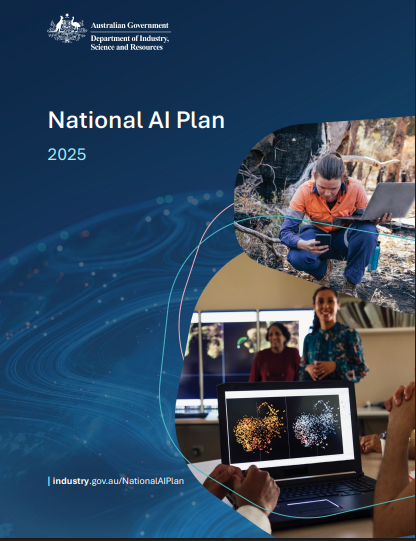
AUSTRALIA UNVEILS ITS NATIONAL AI PLAN 2025: A SHIFT TOWARDS RESPONSIBLE & SOVEREIGN AI (03.12.25)

Australia has released its National AI Plan 2025, a comprehensive framework that positions the country as a responsible and competitive AI leader in the Indo-Pacific. The plan outlines new investments in infrastructure, sovereign capability, safety, workforce development, and inclusive access—marking one of the most significant AI governance documents of the year.

AUSTRALIA UNVEILS ITS NATIONAL AI PLAN 2025: A SHIFT TOWARDS RESPONSIBLE & SOVEREIGN AI (03.12.25) Read More »

WHITE HOUSE PAUSES ORDER TO BLOCK STATE AI LAWS: WHAT IT MEANS FOR U.S. & GLOBAL AI GOVERNANCE? (25.11.25)

In a dramatic reversal, the White House has paused a draft executive order that would have challenged state AI laws and tied federal broadband funding to regulatory compliance. The decision comes amid fierce pushback from states, industry, and the public — raising critical questions about the future of AI governance, federalism, and the balance between innovation and protection.

WHITE HOUSE PAUSES ORDER TO BLOCK STATE AI LAWS: WHAT IT MEANS FOR U.S. & GLOBAL AI GOVERNANCE? (25.11.25) Read More »